
Choosing Colours.
A few simple steps make choosing colours much easier, and save you living with a colour you don't love.

Five Steps to the Right Colour.
Start with the light
In Melbourne, north-facing rooms get the sun and warm, bright light. South-facing rooms get cooler, flatter light, where warmer whites and soft colours feel more inviting.
Pick a few, not twenty
Choose two or three colours you like from the fixed things in the room: floors, benchtops, tiles and big furniture.
Paint test patches
Paint a patch about the size of an A3 sheet on two different walls. Small chips look very different on a whole wall.
Look at different times
Check the patches in the morning, the afternoon and at night under your own lights before you decide.
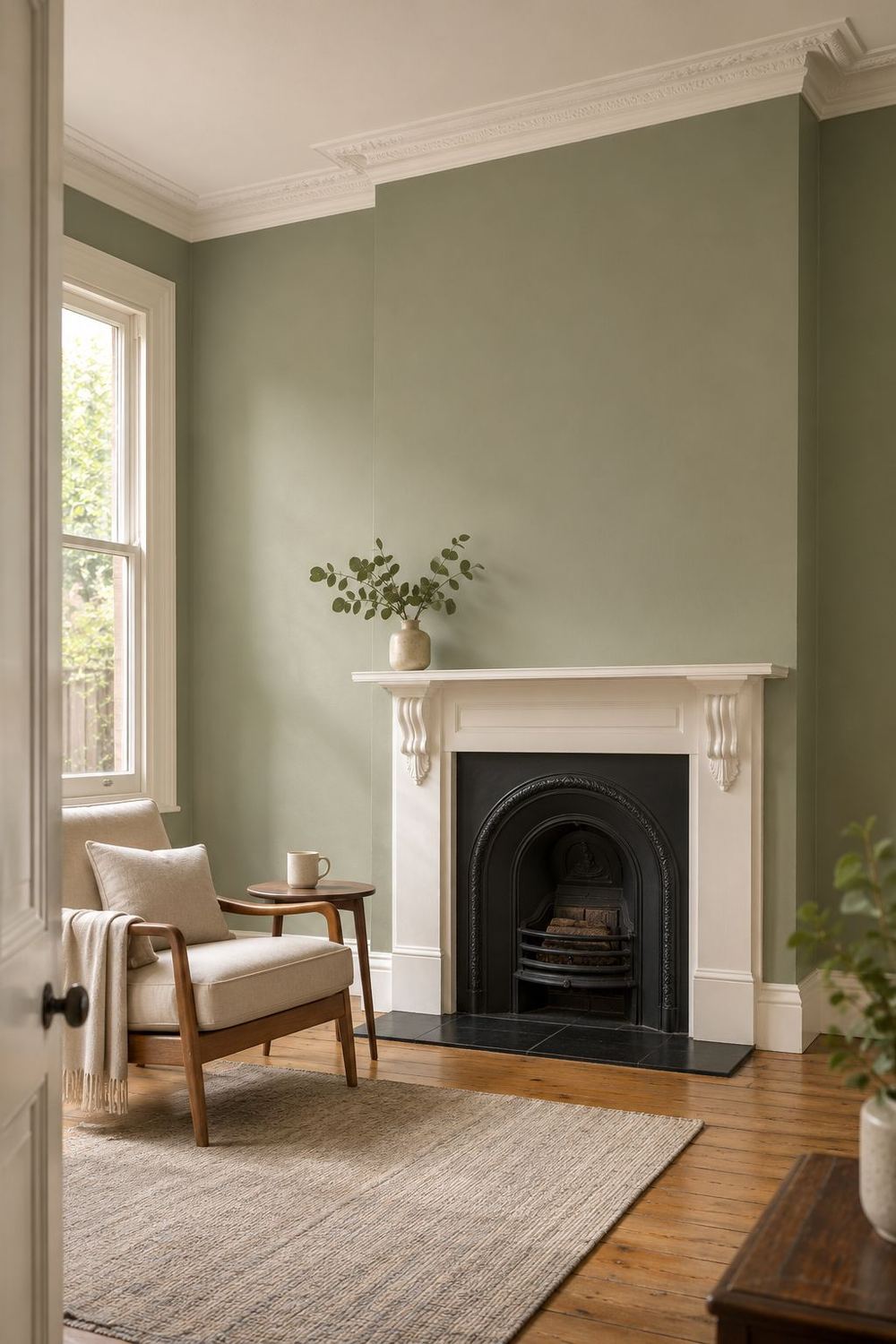
Soft Greens.
Muted greens like sage and olive sit well in period homes. They work with timber floors, white fireplaces and leafy views, and they change gently through the day.
Pair a soft green with a warm white on the skirtings, cornices and door frames. Paint a test patch first: greens can look grey in a south-facing room and much brighter in afternoon sun.
Whites.
White is the most popular choice, and the hardest to pick. Whites lean warm (cream, yellow), cool (blue, grey) or neutral.
Warm whites suit south-facing rooms and timber floors. Cooler and neutral whites suit bright, north-facing rooms and modern kitchens. Hold the chips against a sheet of plain white paper to see which way each one leans.
Ceilings
Most ceilings are a flat white. A ceiling in the same white as the walls, or a little lighter, makes a room feel taller.
Sheen Levels.
Sheen is how shiny the dried paint is. More sheen is easier to wipe clean but shows every bump in the wall.
- Flat or matt: ceilings, and walls where you want to hide imperfections.
- Low sheen: most living areas, bedrooms and hallways. Wipes clean and still looks soft.
- Semi-gloss or gloss: doors, skirtings, trims and window frames, which get touched and knocked.
- Wet areas: bathrooms and laundries need a paint made for damp rooms.
Outside.
Exterior colours look lighter and brighter in full sun than on a chip. Pick a shade or two deeper than you think, and paint a test patch on the sunny and the shady side of the house.
Look at the roof, the brick or stone, and the street. Colours that work with what stays are the ones you'll be happiest with.
Heritage Overlays.
In parts of Melbourne, homes in a heritage overlay need a council permit to change exterior colours, or to paint brick or stone that has never been painted. Check your council's planning map before you choose, and tell us so we can plan around it.
Many councils publish guides to period colour schemes for Victorian, Edwardian and interwar homes.
Colour Questions.
Something else? Ask us.
Can you help me choose?
Yes. Talk your ideas through with us when we price the job. We can tell you how a colour is likely to look in your rooms and what sheen suits each surface.
Does a big colour change cost more?
It can. Going from a dark colour to a light one, or the other way, can need an extra coat. We tell you when we price the job.
Can I have a feature wall?
Yes. Tell us which walls and colours when you get in touch, so the price covers them.
Tell Us About Your Home.
Answer a few questions online and see your price in about two minutes. Or call or email with your suburb, the number of bedrooms and bathrooms, and what needs painting, and one of our team will talk it through with you.
- Phone03 9969 9280
- Email[email protected]